Background
Allergic reactions have exhibited a marked global increase in recent years, particularly among infants and young children, leading to serious health concerns. Existing treatments primarily focus on allergen avoidance and managing acute allergic reactions, with a lack of effective long-term relief strategies. Human milk oligosaccharides (HMOs), as natural constituents of breast milk, not only function as prebiotics but also demonstrate direct immunomodulatory capabilities. Among these, 2′-fucosyllactose (2′-FL) stands as one of the most crucial components, offering renewed hope in this field through its potential application in alleviating allergic symptoms. This paper will focus on the immunomodulatory effects of 2′-FL in allergic reactions and its potential clinical applications.
Research Design and Methods
This study employed an ovalbumin (OVA)-sensitised mouse model to evaluate the efficacy of 2′-FL in alleviating allergic symptoms. Mice were treated with oral 2′-FL and subjected to OVA challenge to induce allergic reactions. The study primarily observed the effects of 2′-FL on allergic symptoms such as diarrhoea and body temperature changes, while simultaneously measuring serum levels of mast cell proteinase-1 (mMCP-1). mMCP-1 serves as a marker for mast cell activation, with elevated levels indicating more severe allergic reactions. Furthermore, the study investigated 2′-FL's effects on regulatory T cells (Tregs), which control immune responses by suppressing excessive immune reactions and preventing inflammation and allergic reactions.
Key Findings
1. 2′-FL significantly alleviates allergic symptoms
Experimental results indicate that 2′-FL treatment markedly reduced diarrhoea symptoms in allergic mice and effectively suppressed hypothermia. Compared to untreated mice, those administered oral 2′-FL exhibited significantly diminished allergic responses, demonstrating the compound's pronounced efficacy in alleviating allergic symptoms.
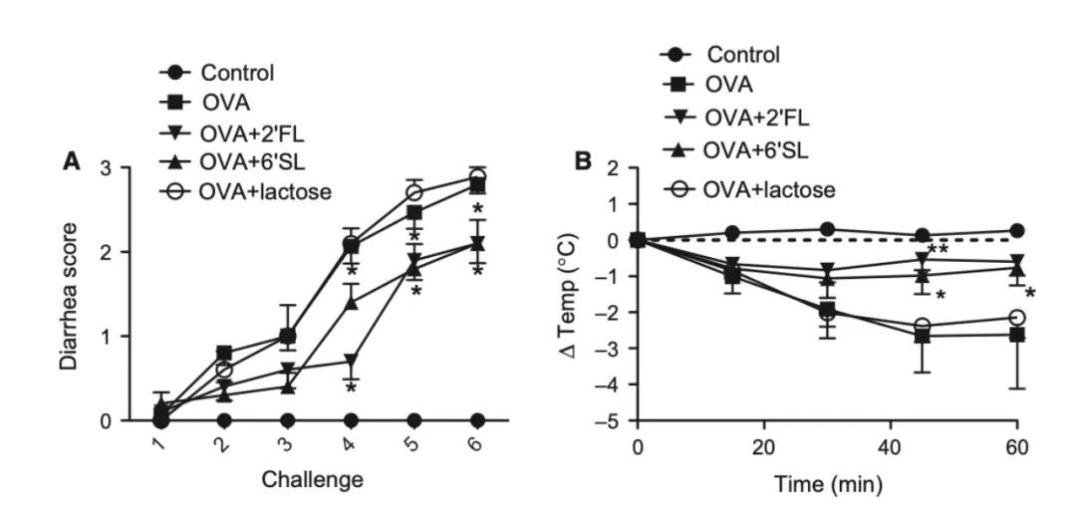
Figure 1: Effects of daily oral administration of 2′-FL on diarrhoea severity (A) and rectal temperature (B) following repeated ovalbumin (OVA) challenge.
2. 2′-FL Inhibits Mast Cell Activation
Research further indicates that 2′-FL significantly reduces serum levels of mast cell protease-1 (mMCP-1). Mast cells serve as pivotal effector cells in allergic reactions; by inhibiting mast cell degranulation, 2′-FL diminishes the release of allergic mediators, thereby alleviating allergic symptoms.
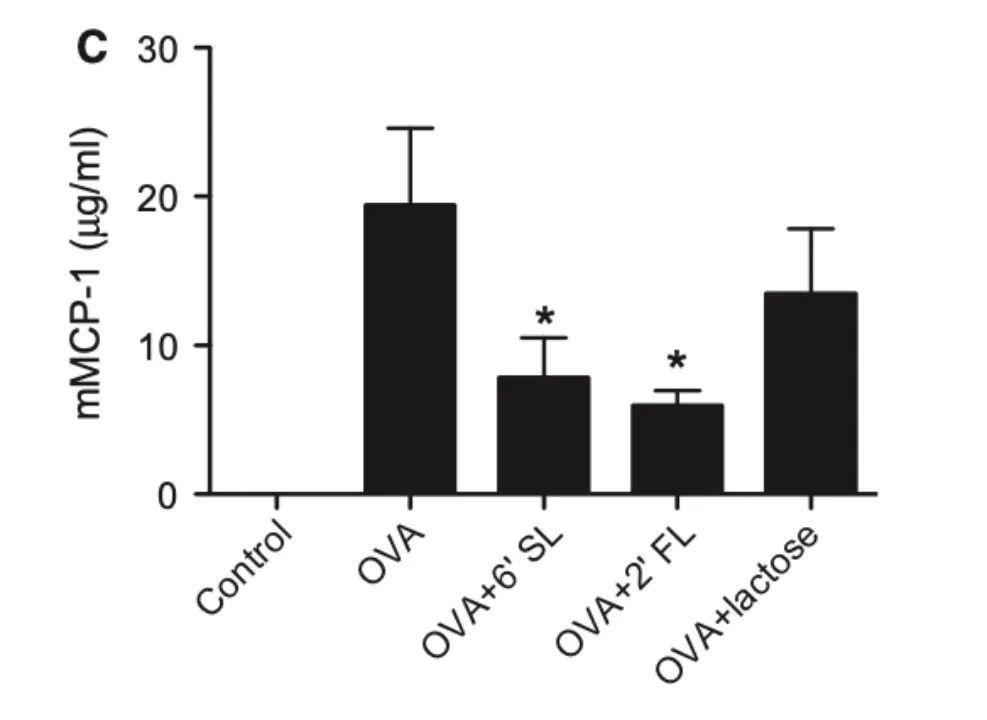
Figure 2: Effect of daily oral administration of 2′-FL on serum mast cell protease-1 (mMCP-1) levels following repeated ovalbumin (OVA) challenge
3. 2′-FL increases the proportion of regulatory T cells
The findings further indicate that 2′-FL treatment significantly increased the proportion of regulatory T cells within the Peyer's patches of mice, particularly those secreting the anti-inflammatory cytokine IL-10. These T cells are capable of suppressing allergic reactions by secreting anti-inflammatory factors, further elucidating the immunomodulatory effects of 2′-FL.
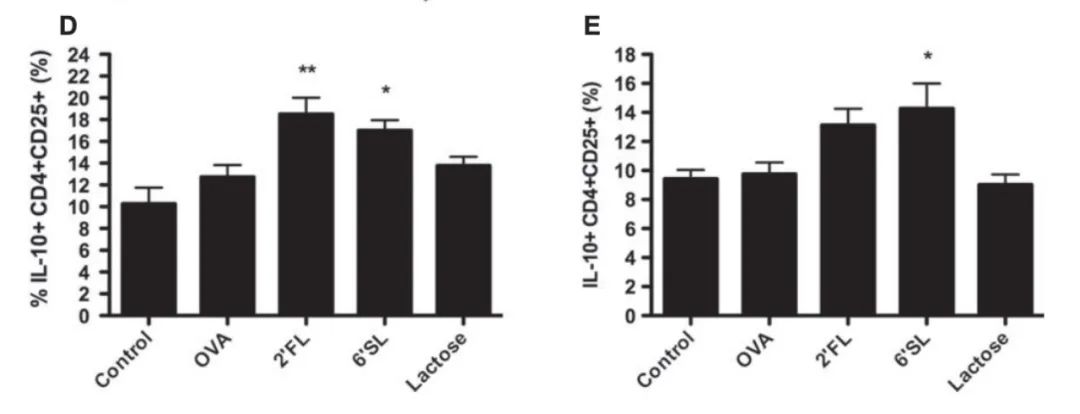
Figure 3: Effect of daily oral administration of 2′-FL on IL-10 cell populations in Peyer's patches
Discussion and Outlook
This study demonstrates that 2′-FL plays a significant role in alleviating allergic reactions, not only reducing acute allergic symptoms but also preventing their onset by modulating the immune system, inhibiting mast cell activation, and increasing the proportion of regulatory T cells. Future investigations may explore its potential in early intervention strategies, such as incorporating 2′-FLinfant formula to foster a more robust immune system and reduce allergy incidence. As research progresses, 2′-FL holds promise as a pivotal component in allergy prevention and treatment, offering expanded possibilities for managing allergies in infants, young children, and adults alike.
Reference
[1] Castillo‐Courtade L, Han S, Lee S, et al. Attenuation of food allergy symptoms following treatment with human milk oligosaccharides in a mouse model[J]. Allergy, 2015, 70(9): 1091-1102.